


🔧 12V 80W Electric Oil Extractor Pump – Fast, Cleaner Oil Changes
🔧 12V 80W Electric Oil Extractor Pump – Fast, Cleaner Oil Changes
Couldn't load pickup availability

🔧 12V 80W Electric Oil Extractor Pump – Fast, Cleaner Oil Changes
Skip The Jack. Pump The Old Oil Out From Above.
Connect the 12V pump, insert the inlet hose into a compatible oil access point and transfer used oil directly into your waste container—without crawling under the vehicle for a traditional drain-pan setup.
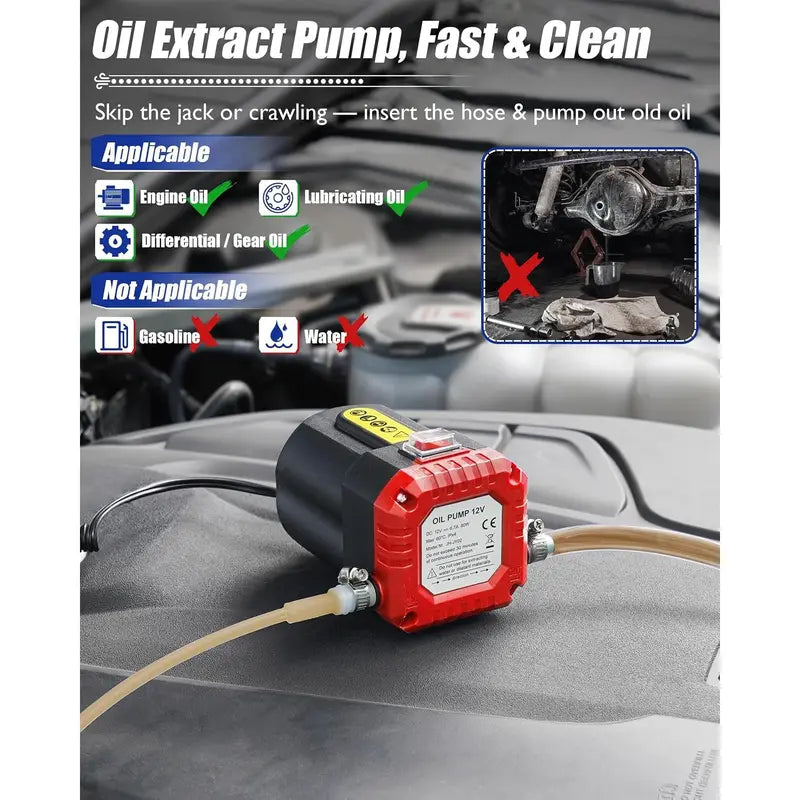
Less Crawling. Less Drain-Pan Wrestling.
Traditional draining can mean lifting the vehicle, reaching the drain plug and trying to catch used oil before it spreads across the floor.
A suction-style extractor gives compatible engines another way to remove old oil from above.
Product imagery specifically positions the pump as an alternative to crawling under the vehicle.
Route the outlet hose directly into a suitable used-oil container.
The 12V motor replaces hand-pumping during compatible oil extraction.
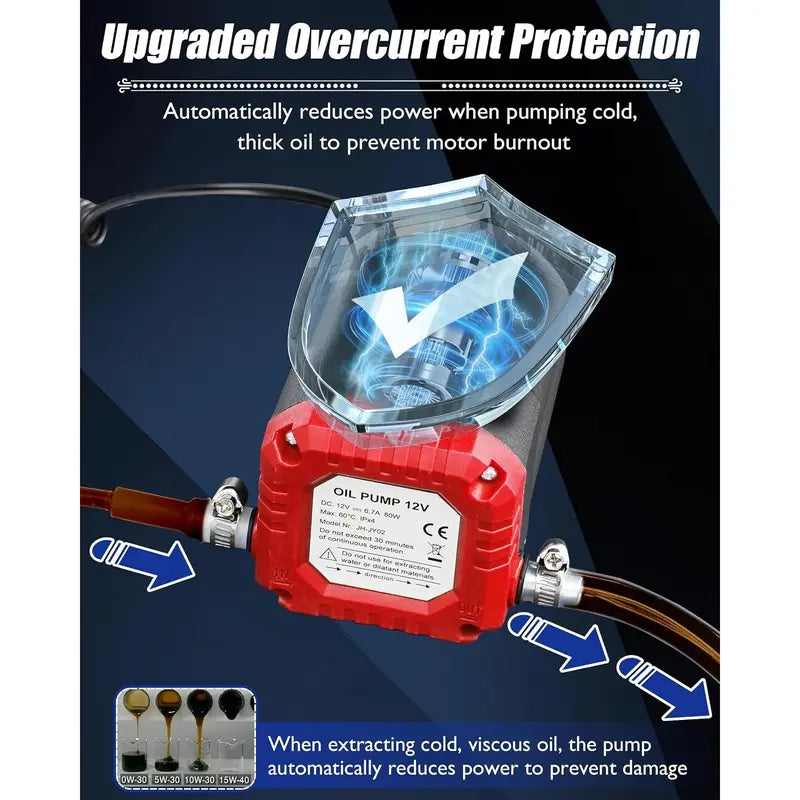
Upgraded Overcurrent Protection Helps Protect The Motor.
Current product imagery states that the pump automatically reduces power when extracting colder, more viscous oil to help prevent motor burnout.
That protection is especially relevant because thicker oil places more load on a compact transfer pump.
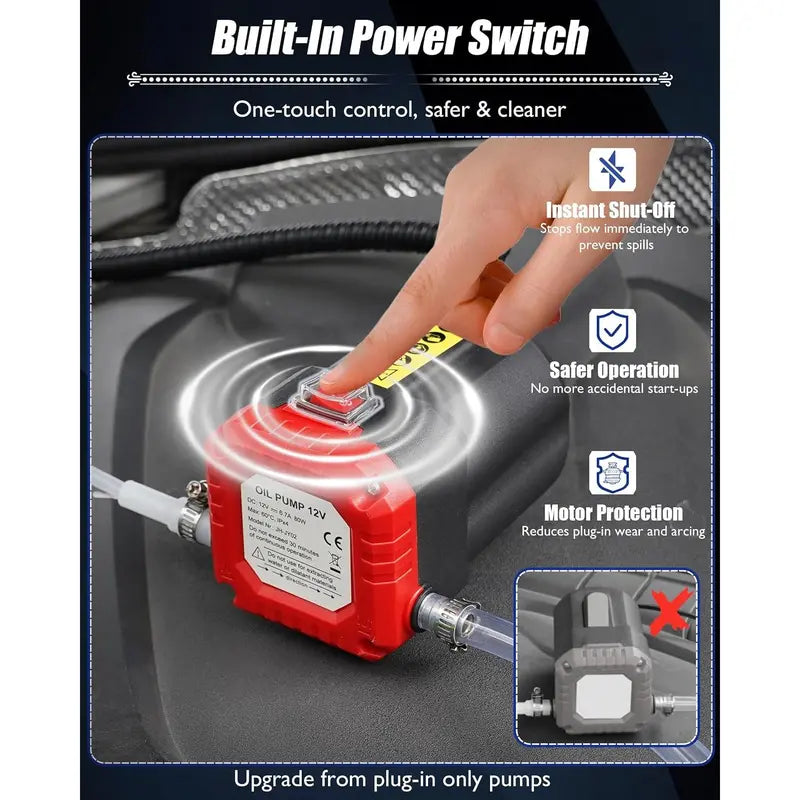
Built-In Power Switch For Start & Stop Control.
The pump body includes its own rocker switch, so you don't have to disconnect the battery clamps every time you want to stop the transfer.
Current imagery specifically highlights instant shut-off, easier operation and reduced accidental start-up risk.
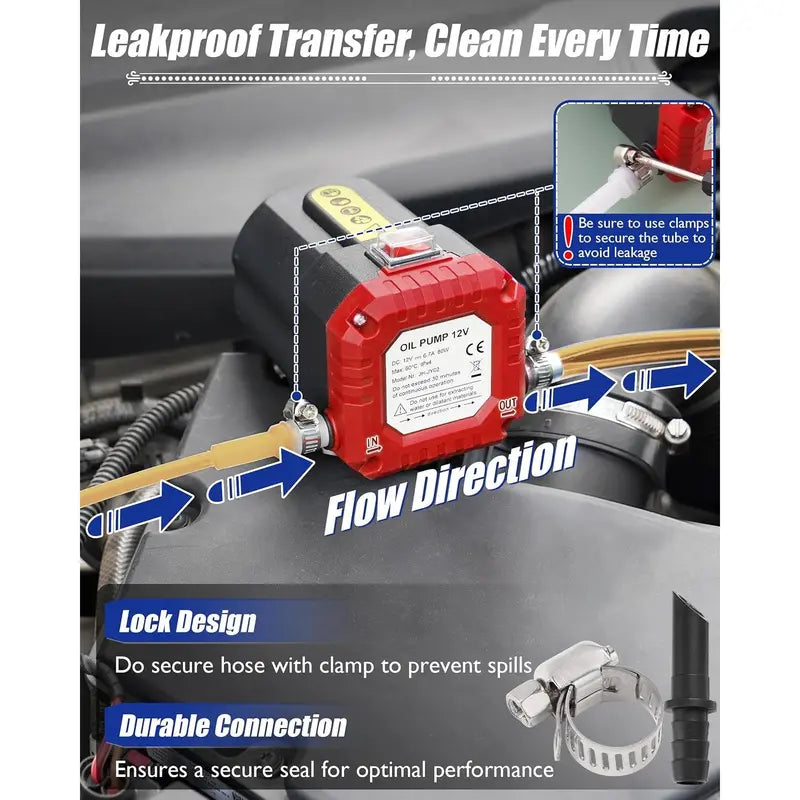
Clear Flow Direction. Clamped Hose Connections.
The pump ports are marked for inlet and outlet flow, while the included hose clamps help secure the tubing at the pump connections.
Product imagery specifically instructs users to tighten the clamps to help reduce leakage during transfer.
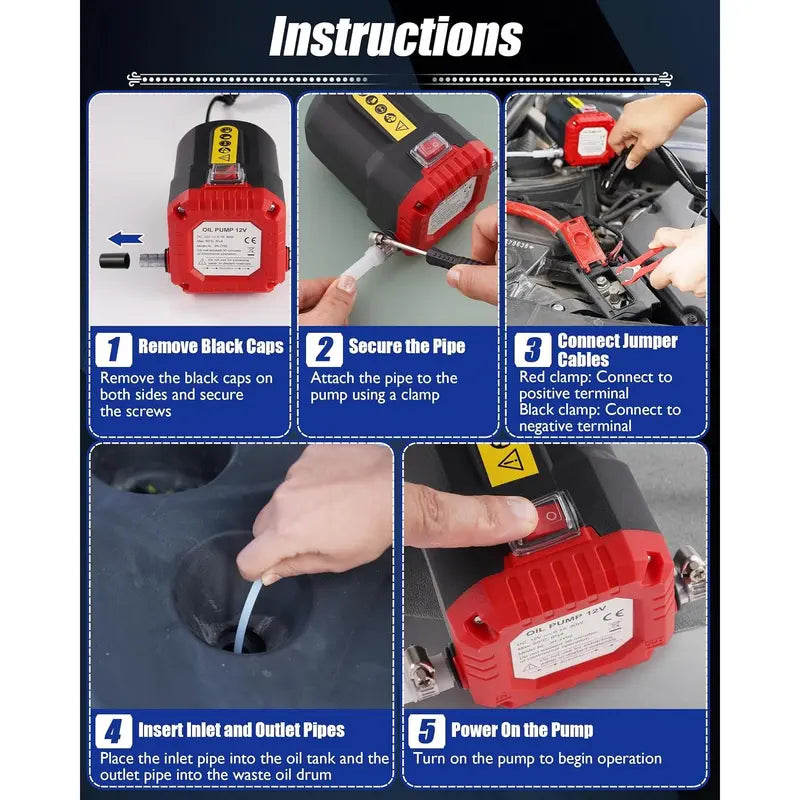
Connect It. Route It. Switch It On.
Remove the protective caps from both pump ports before attaching the hoses.
Fit the hoses onto the correct inlet and outlet ports and secure the connections with the supplied clamps.
Connect the red clamp to the positive terminal and the black clamp to the negative terminal.
Place the inlet hose in the compatible oil access point and route the outlet hose into an appropriate waste-oil container.
Turn on the built-in switch and supervise the transfer continuously.
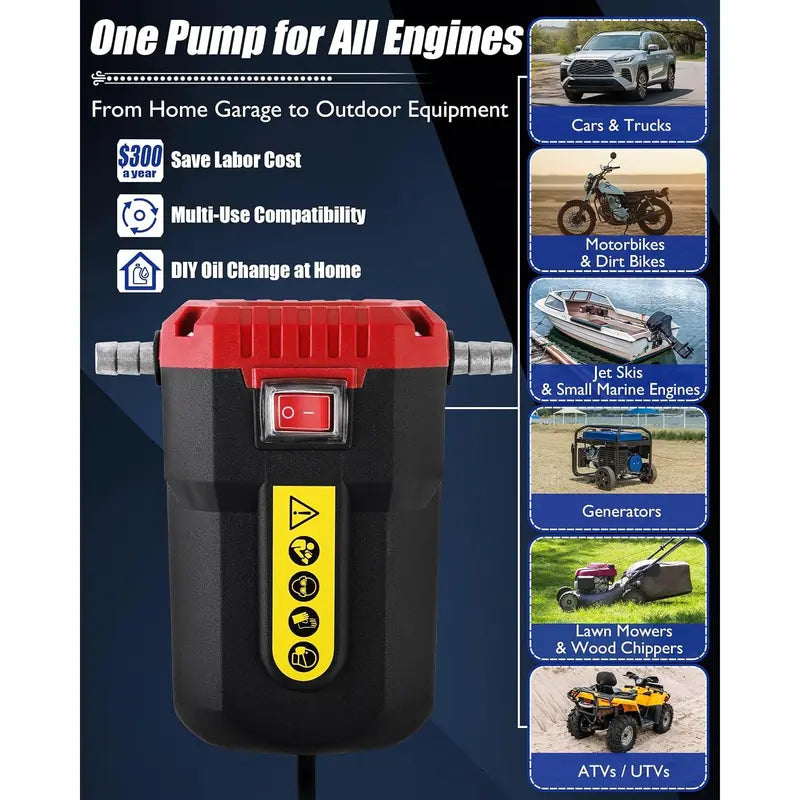
From The Garage To Small Marine & Outdoor Equipment.
Current imagery shows the pump used across several engine-powered applications where the oil type and access method are compatible.
For compatible engine-oil extraction and transfer jobs.
Shown for motorbikes and dirt bikes with compatible service access.
Current imagery includes jet skis and small marine engines.
Useful where oil can be accessed and transferred through compatible tubing.
Shown with lawn mowers and wood chippers.
Current imagery also includes off-road utility vehicles.
Engine Oil & Gear Oil — Not Gasoline Or Water.
Current product imagery explicitly identifies engine oil, lubricating oil and differential / gear oil as applicable fluids.
The same image explicitly marks gasoline and water as not applicable.
Pump, Hoses & Clamps In One Setup.
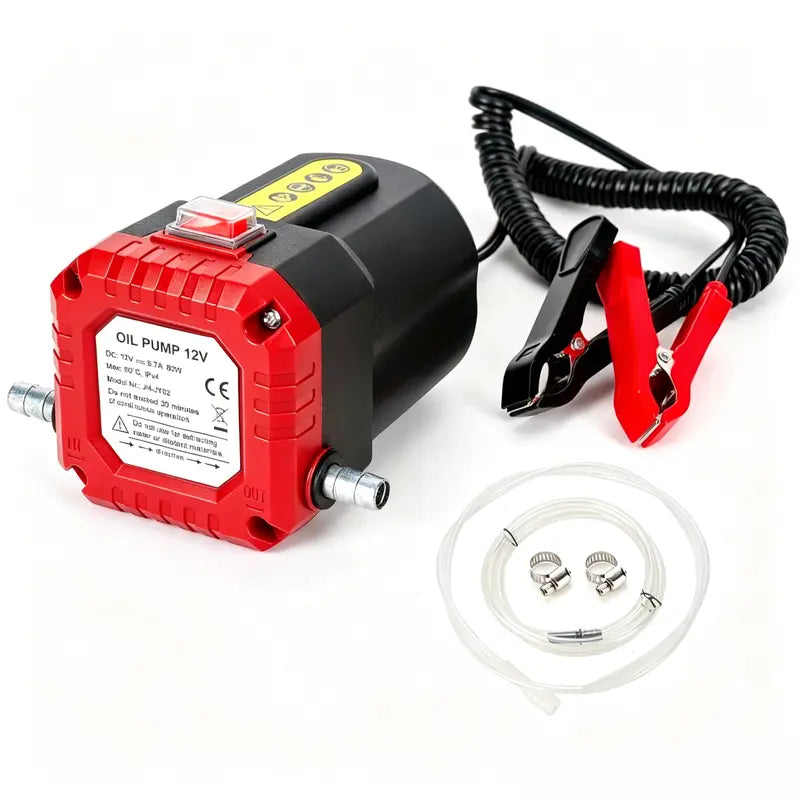
Current product imagery lists one inlet hose, one outlet hose and two hose clamps along with the electric pump and battery-clamp lead.
Built To Make Compatible Oil Extraction More Direct.
The current listing specifies 12V DC operation with an 80W motor.
Current imagery states that the pump reduces power under heavy load from colder, thicker oil.
A built-in rocker switch provides direct power control during the transfer.
The current specifications image lists a flow rate of 0.13 GPM.
Current imagery lists a 30-minute duty cycle.
The kit includes dedicated inlet and outlet tubing plus two hose clamps.
What The Current Product Page Clearly Confirms.
The current manufacturer's product graphic specifically marks gasoline and water as unsuitable for this pump. Use only with compatible fluids and service procedures.
Vehicle compatibility depends on the engine layout and whether the oil reservoir can be accessed correctly by the supplied inlet hose. Always confirm the proper oil-change procedure for the specific vehicle or equipment before extraction.


