⏳ Limited-Time Offer
SALE ENDED
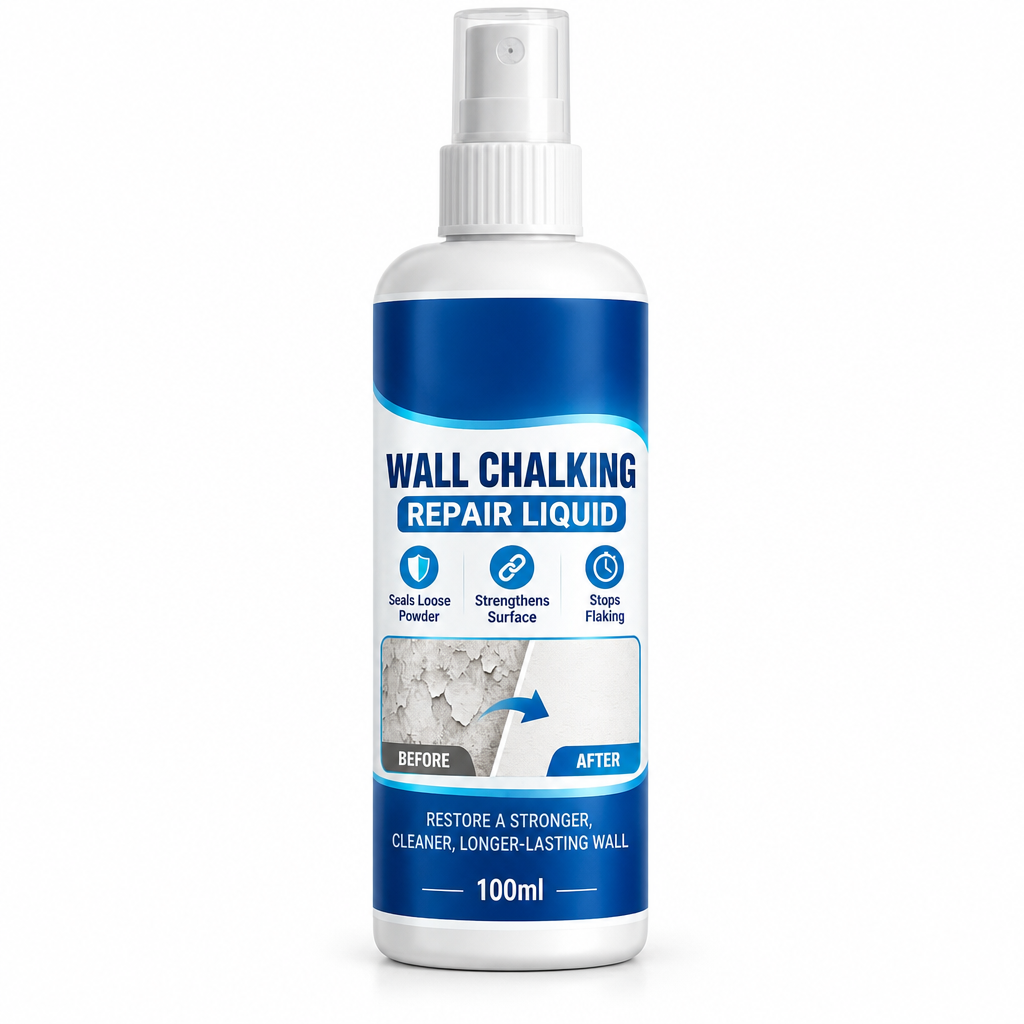
🥳Wall Repair Solution—prevents chalking, provides deep adhesion, and is waterproof✅
Couldn't load pickup availability
🥳Wall Repair Solution—prevents chalking, provides deep adhesion, and is waterproof✅
FEATURES
LOCK DUSTY WALL CHALKING - Instantly seals crumbling plaster to create a solid durable foundation.

CHALKY WALLS RUIN HOMES - Unbound masonry degrades over time causing messy flaking walls.

FAST ROLLER COATING APPLICATION - Effortless application provides maximum coverage on weak plaster bases.

DEEP CORE STRUCTURAL BINDING - Acrylic copolymer molecules fuse loose particles into solid plaster.

ADVANCED ACRYLIC POLYMER FORMULA - Waterproof matte coating locks moisture deep inside the wall.

SELECT YOUR WALL SOLUTION - Choose between two convenient sizes for your wall projects.

THREE SIMPLE STEPS - Our simple three step method secures crumbling plaster quickly.

INSTANT DUSTPROOF RESULTS - Compare the raw chalky surface to our cured coating.

SPEC
NetL: 50ml, 100ml
PACKAGE INCLUDES
1 x Wall Repair Liquid & Curing Agent
NOTES
Color may not appear exactly as in real life due to variations between computer monitors.

- 5 stars: 32 (91%)
- 4 stars: 3 (9%)
- 3 stars: 0 (0%)
- 2 stars: 0 (0%)
- 1 star: 0 (0%)
A chalky wall needs a stable base before repainting. This acrylic binder looks suitable for a small prepared patch rather than covering an entire room.
Thanks for your interest. Please follow the label directions and check surface suitability before application.
The focus on binding loose wall dust is helpful for older plaster that leaves powder on your hand.
The listed roller application makes it approachable for a small weekend wall repair.
It makes sense to stabilize a powdery wall before adding fresh paint. Surface preparation still matters.
I would make sure any water leak is fixed before applying a waterproof coating to an interior wall.
The product description focuses on aging plaster with chalky residue, which is a specific and useful repair scenario.
A matte cured coating sounds preferable to an overly shiny patch under new wall paint.
This type of binder could be useful on a small hallway section that sheds fine plaster dust.
Treating unstable material before repainting is a sensible part of a longer-lasting wall refresh.
This appears intended to bind loose chalky surfaces rather than fill large cracks or holes.
Thank you for pointing that out. This treatment is intended for chalky surfaces and is not a substitute for structural repairs.
The smaller bottle option might be enough for a limited area once coverage is confirmed.
The photos comparing untreated and cured surfaces are useful for understanding the product goal.
I would measure the repair area before deciding between the two bottle sizes.
Using a roller to coat prepared plaster sounds less intimidating than specialized repair equipment.
The product is aimed at surface chalking and light flaking. Severely damaged plaster still needs proper repair.
I would follow the label for curing before applying any paint or additional coating.
A primer that binds weak plaster can be useful when ordinary paint will not adhere cleanly.
The stated purpose of securing chalky residue is relevant for older interior walls.
Careful cleaning and application should come before judging whether a wall repair treatment worked.
A small powdery section in a utility space is the type of project I would evaluate this for.
I like that the page identifies a specific wall problem instead of calling this an all-purpose filler.
Loose paint chips and dirt should be handled before rolling on any binding treatment.
For a spot repair the compact bottle format is convenient to store with painting supplies.
I would verify that the fully cured coating accepts the finish paint planned for the wall.
Masking baseboards and trim would make roller application neater on a narrow section.
A coating should not replace fixing the underlying source of water damage.
Clean the area, apply as instructed, allow to cure, and then reassess the wall before finishing.
The acrylic copolymer binder is presented as a way to lock loose particles together on plaster.
A dedicated chalking treatment could simplify the prep stage when the affected area is small.
After patching an older wall, I would consider whether a binding treatment is needed before paint.
Trying a small inconspicuous area first is wise to check appearance and compatibility.
Surface stabilization is different from rebuilding crumbling masonry. The severity of damage matters.